





How Do Your Colors Change When You Go Gray?
Susan just asked me,“I would like to understand my color as my hair is gray.”
And I know he is not alone.
Going gray is not just about the hair. It’s about identity. It’s about visibility. It’s about standing in front of your closet and thinking, Why don’t these colors work the way they used to?
So let’s talk about what really happened.

Because your colors change when you go gray, but not in the way most people think.
First: What are you drooling over?
There are a few things to think about when we are going gray.
It depends on:
- Whether it’s gray with a warm or cool undertone
- Whether it’s gray in light or dark
- How light your gray ends up
These changes are important.
If we look cool, brown or black, for example, one thing that happens as we go gray is that our color softens a little.
You can go from a bright palette to a soft palette. Colors aren’t as bright as they used to be, as the quality of multi-colored hair fades and the skin changes along with your hair (just in a subtle way).
And depending on how gray you are, you can move:
- From dark to light
- From shiny to soft
- From warm to cool
Our color may actually change slightly as we gray.
I used to have dark hair (black, then dark chocolate brown). Then when I had to dye my hair every 10 days so I wouldn’t look like a skunk with a halo, I decided to go blonde (which I wrote about in my Not Going Gray Gracefully series). I was blonde for about 10 years before I decided, after the long COVID shutdown, to accept my silver foxette and ended up with light gray hair.
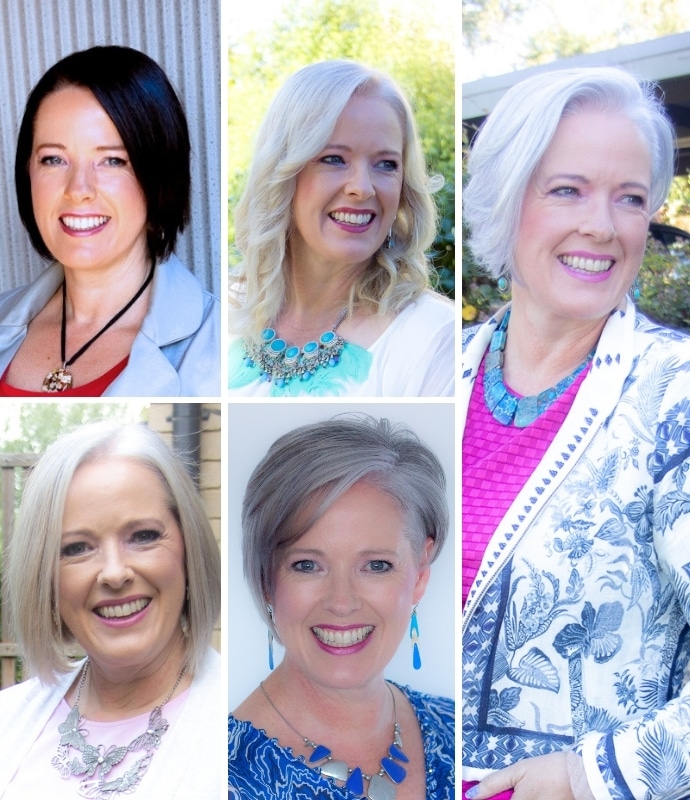 But your approach may be different. And that is important.
Warm Grays vs Cool Grays (Yes, There Is a Difference)
One of the things that most people don’t realize is this:
There is a difference between warm grays and cool grays in fabrics.
- Warm grays contain a lot of yellow or green.
- Cool grays have blue or deep purple undertones.
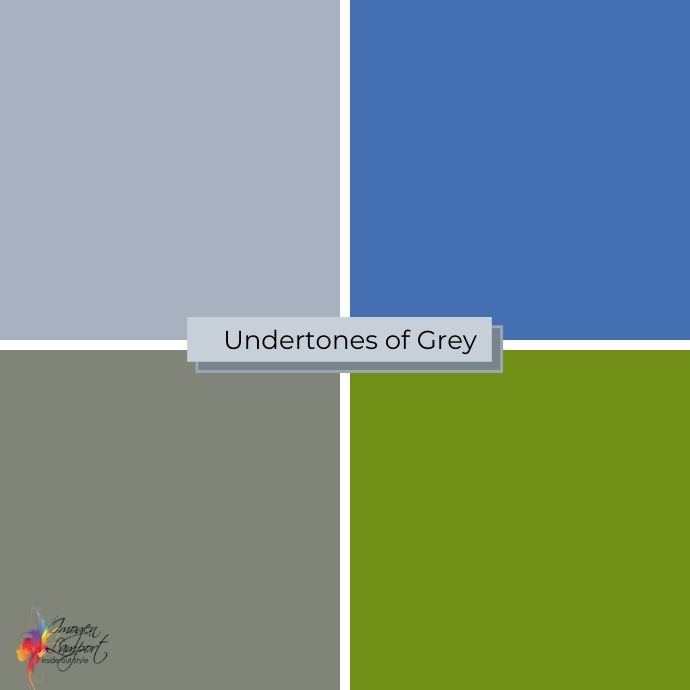
Top: Cool gray with a blue background, Bottom: Warm gray with a blue background
Most gray fabric is not “true black and white gray.” They lean warm or cool.
And here’s what’s interesting:
There is no such thing as gray hair. It’s just the appearance of white, colorless hair that grows after the melanocytes stop producing pigment, mixed with hair that still has pigment, giving the impression of graying.
- If you have gray on red hair, your gray tends to look warmer. This is because your existing hair still has a warm color in it, and when mixed with white hair, it makes it appear more gray.
- If the gray is dark brown and you still have more dark hair than light, you will get that salt and pepper look, as well as dark gray.
- If you are gray to light blonde, your gray may look white and cool.
Where you start affects where you end up.
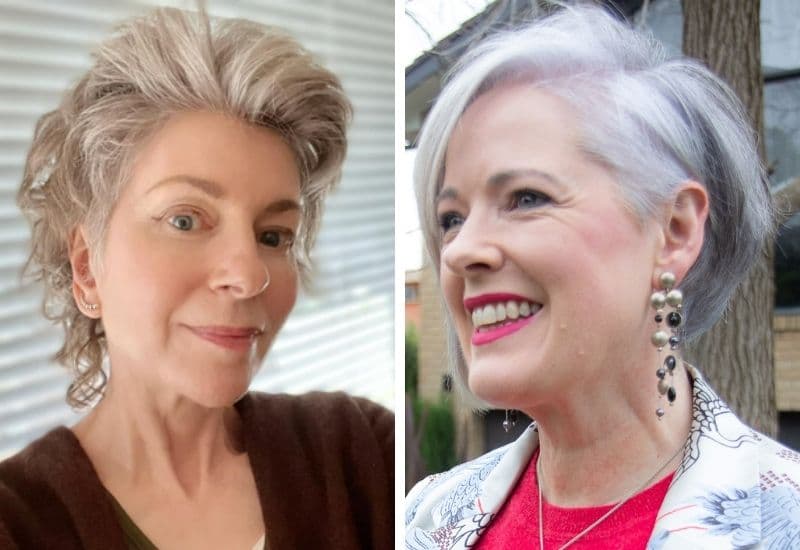
Warm gray on the left, gray to red, and cool gray on the right, gray to dark brown
So even if you go gray, the undertone is still important.
Is Your Voice Changing?
Sometimes yes. Sometimes no.
Generally, if you were cool, you will stay cool, but you will be soft and easy.
If you are warm, you can still wear warm colors, but they may not need to be as warm as they were warm and may be more muted.
Because gray hair is naturally a little cooler.
You no longer have the same strength of yellow in your color. So those warm colors that once looked so beautiful may feel… off.
It’s not that you’re cool.
You may need a little warm-up.
That subtle change makes the difference.
The Biggest Change: Your Best Neutral
This is the part that many women miss.
Your best neutrals come from your hair, eye, and skin tones.
When your hair color changes, your best neutral changes.
I used to have dark brown hair. Brown was a neutral color for me. It was a good match for my color.
Now?
There is nothing brown in my complexion.
Even though I can wear cool browns, they just don’t relate to me the way gray does.
Now cool grays, especially light cool grays with white, are my go-to neutrals because they echo my hair, which is now almost 100% white on my face.
 When I had dark gray hair, dark gray suited me best.
As my hair lightened, my best neutrals shined.
That’s the shift.
If you’ve had warm brown hair, it may have been the neutral of everything.
Now maybe it’s a warm gray instead, and a light taupe might now be among your best.
That’s why going gray is a good time to re-evaluate your neutrality.
It doesn’t have to be your entire palette.
Your neutrality in particular.
That said, if you’re too light, your entire palette will need to be light as well.
Should You Drop Everything?
Not at all.
Please don’t panic and clean your wardrobe.
We don’t have to throw everything away just because our color changes.
You can:
- Dye clothes into your new best – check out all the posts on how to over-dye your clothes here.
- Use shoe paint to change the color of quality shoes – find out how easy it is to paint your shoes here
- To gradually transition from your old colors to your new palette, you don’t have to change your entire wardrobe at once.
I had black boots and shiny shoes when I had black hair. Now? They are very harsh. But they are comfortable and well made.
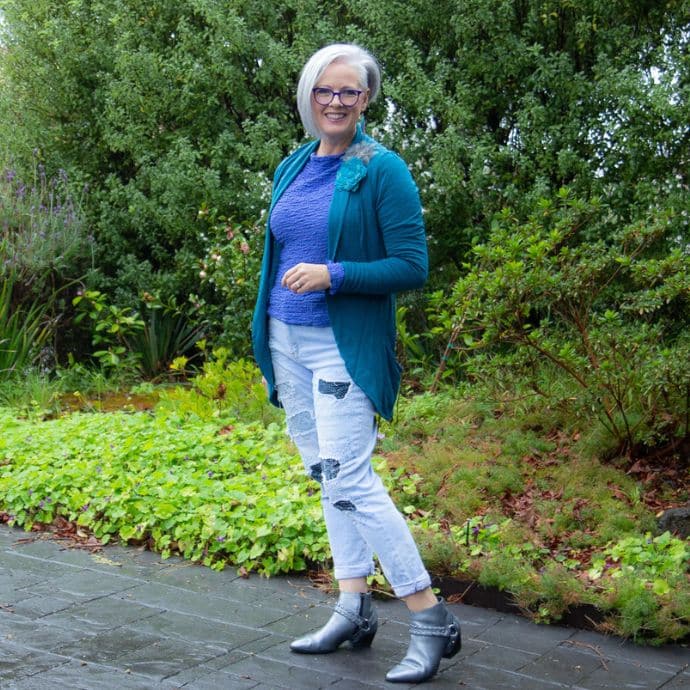 So I painted them. And now I wear them again as they make a good book for my hair.
Your wardrobe should be like a great husband, not a bad boyfriend. We don’t take it out at the first sign of change. We adapt smartly.
If Your Colors Feel “Wrong,” Pay Attention
If you feel uncomfortable with the colors you used to love, that’s information.
The skin changes along with the hair.
I don’t have the same skin tone power as dark hair. I couldn’t dye my hair back to that now; it would completely overwhelm me and look too harsh on my skin.
Your color changes.
And that’s not a problem.
Life would be boring without change. My mother kept saying,“A change is as good as a vacation.”
Instead of criticizing the changes, we can use them as a moment to reevaluate.
Refurbishment.
Refinement.
It may be time for a color update, as not only has your palette changed, so will your value and color contrast, as well as your ideal value, so the way you combine clothes will also morph and need to be updated.
The Science Behind the Shift
If we look at this analytically (and I know many of you love that), we are talking about three aspects of color:
- Undertone – Warm vs cool
- Value – Light vs dark
- Chroma – Bright vs soft
Graying often hurts:
- Power (of soften)
- Price (usually simple)
- A gray undertone can also slightly cool the overall effect
That’s why your old warm orange may feel too strong. The black coat you used to love now feels harsh.
It’s not you.
Physics.
Color consistency is about repetition and resonance. Your clothes need to echo what comes naturally to you.
Just like good music goes along. The colors that are right for you today match and match the colors you are born with right now.
If that changes, your palette needs to be adjusted.
An Invitation to Welcome Your Silver Foxette
Going gray is not the end of your style story.
Evolution.
It is an opportunity to refine, simplify, soften, and modernize.
A good time to check back:
- Do these colors still work?
- Is my neutrality still relevant to me?
- Have I lightened my wardrobe enough to match my new hair?
And if you’re not sure?
That is not failure.
That’s just a sign that your color has changed, and it’s time for a retouch.
Style is not born. It is readable. It is noticeable. It is fixable.
And going gray doesn’t mean losing vibrance or style.
It’s about finding a new kind of sparkle.
Not sure what colors work best for you right now? Get a personal color analysis online and discover your new signature colors, the best neutrals and how to combine your colors to create harmony with your current look.
Spacy Gal Goes Gray
Spacy Gal Goes Gray Part 2
Warm vs Cool Gray Hair and How Going Gray Can Change Your Wardrobe Choices
