
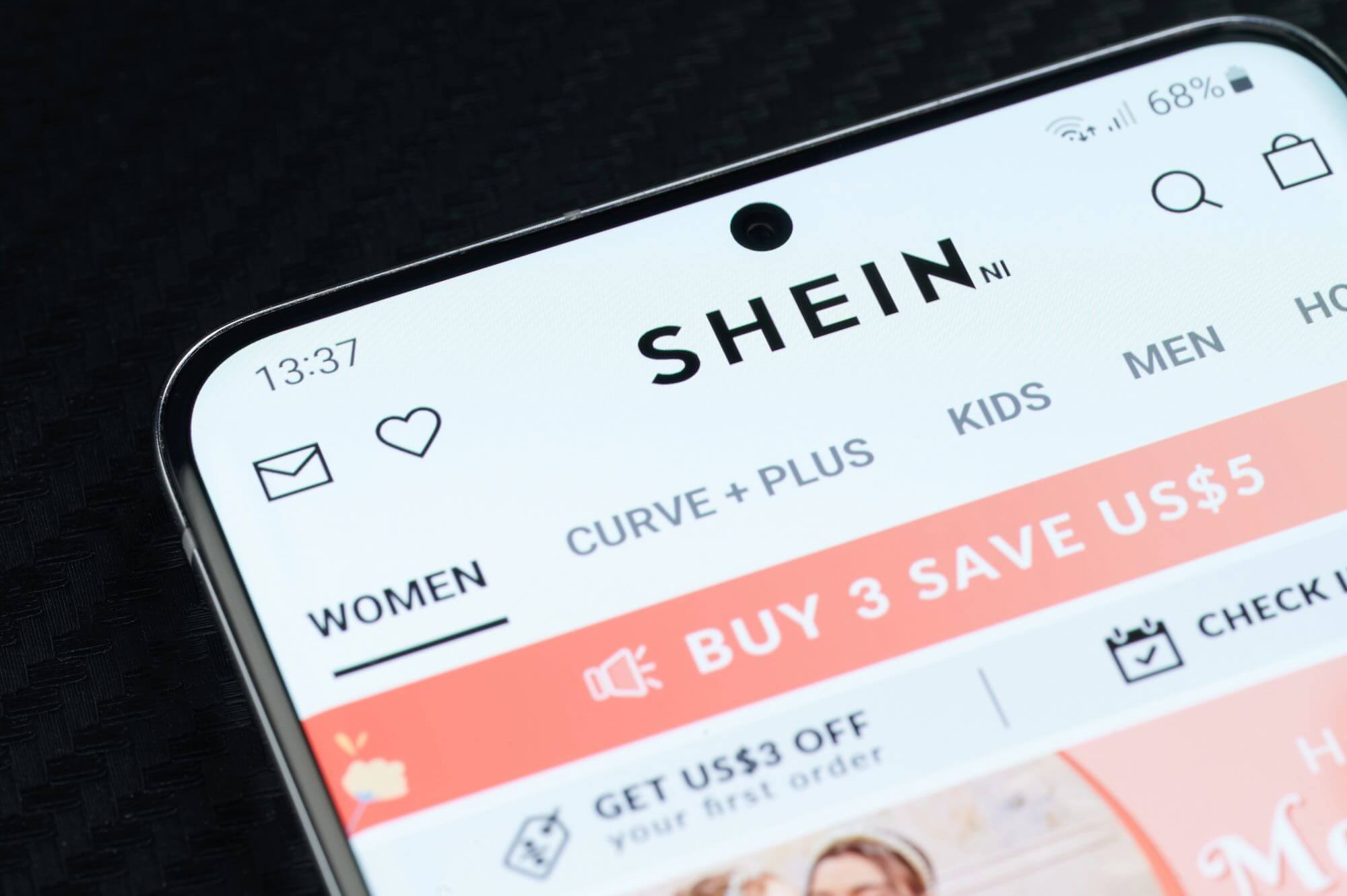

SHEIN is praised for its trendy styles, cheap prices, and huge product selection. As a digital e-commerce company, the brand generated $41.9 billion in annual revenue in 2025.
What SHEIN doesn’t tell you is that despite their massive profits, they steal styles from designers, rely on factories with sweatshop conditions, and produce huge amounts of waste while creating their excessive variety of styles.
In fact, they add 6,000 styles to their site every single day. Let’s be clear about one thing: this level of hyper consumption can never be sustainable.
Is SHEIN Fast Fashion?
Yes. SHEIN is ultra fast fashion, one of the fastest in the world. It adds thousands of new styles to its site every day, and it grew with the help of influencers and Gen Z shoppers unboxing $1,000 SHEIN hauls on TikTok: string bikini sets for a few dollars, knockoffs of the trendiest handbags, shoes, and jackets for $20 or less, and cheap crop tops for nights out.
The speed comes at a cost beyond the environment. SHEIN has been widely criticized for culturally appropriating styles, including selling a swastika necklace, Islamic prayer mats marketed as Greek rugs, and traditional South Asian clothing sold as pant sets.
SHEIN may be an easy way to look stylish, but it’s the epitome of “cheaper is not better.” And when it’s been hit with claims of unethical production, it has responded with greenwashing.

How Ethical and Sustainable is SHEIN?
Ujo Shop has rated SHEIN three times. Our latest rating, from October 2026, is−39/100, among the lowest scores we give.
We score brands on transparency, fair labor, sustainable materials and production, and diversity. Since our earlier ratings, we’ve also added three principles that can subtract up to 45 points: Is the brand fast fashion? Does it inspire us? Do we trust it? That’s why SHEIN’s score is now negative.
How SHEIN’s Score Has Changed
- 2021:0/100
- 2022:4/100, for a public code of conduct, a diversity policy, and some factory assessment results
- 2026:6 points across our four categories, minus 45 for our principles, for−39/100
In other words, SHEIN has published a little more data since 2022. But it’s still ultra fast fashion, and more disclosure hasn’t changed that.
SHEIN’s 2026 Rating: −39/100
Transparency: 0/14
No factory list, supplier names, or factory-level audit results, even though SHEIN works with more than 7,500 contract manufacturers in China alone.
Fair Labor: 3/33
SHEIN publishes a supplier code of conduct and says it audits its factories regularly. In 2025 it also commissioned a wage study of 208 of its largest suppliers in Guangzhou, which found that 95% of sampled workers earned at or above the local living wage. But SHEIN chose which factories to include, about 3% of its contract manufacturers, and more than a quarter of the workers surveyed said their wages felt insufficient. A study of hand-picked factories isn’t a program to raise pay, so it doesn’t earn living wage points.
Sustainably Made: 3/49
SHEIN now measures and discloses its emissions and has set science-based reduction targets. But by its own report, its value chain emissions, where nearly all of its footprint comes from, are 20% higher than in 2023. Recycled polyester is just 9.2% of the polyester it uses. And its resale platform, SHEIN Exchange, sold only a few hundred items in 2025, for a total of almost $4,000.
DEI: 0/4
No public diversity data or inclusive hiring commitments.
Our Principles: −45
- Fast Fashion (−25): Ultra fast fashion built on constant drops and rock-bottom prices
- Inspire (−10): No leadership in ethical fashion
- Trust (−10): Progress on paper, but no transparency to verify it
Overall: −39/100
SHEIN is not ethical, not sustainable, and not transparent. SHEIN also owns Romwe, which shares this rating.
Does SHEIN Use Sweatshops?

Based on the evidence, many of the factories making SHEIN’s clothes have sweatshop conditions: very long hours, little time off, and safety problems.
In 2021, the Swiss human rights group Public Eye interviewed workers at SHEIN suppliers in Guangzhou and found 75-hour work weeks. In 2022, Channel 4’s documentaryUntold: Inside the Shein Machinereported workers at two supplier factories working up to 18 hours a day with one day off a month. SHEIN investigated and admitted that hours at both factories exceeded local regulations, though it said the breaches were “significantly less than claimed.” It then pledged $15 million to improve conditions at supplier factories.
The problem didn’t go away. When Public Eye returned in 2023, workers still described weeks of more than 75 hours, beyond the 60-hour limit in SHEIN’s own supplier code of conduct. One worker said he worked from 8 a.m. to 10 p.m. every day, with one day off a month.
SHEIN’s own numbers point the same way. Of the 4,822 audits it ran on its suppliers in China in 2025, 47% received a grade of C or lower. The most common violations at C-grade suppliers were excessive working hours, failure to provide workers’ social insurance, and health and safety problems. SHEIN says conditions are improving, and the share of A and B grades did rise from 47% in 2024 to 53% in 2025. But by its own count, nearly half of its audited suppliers still fall short of its standards.
Does SHEIN Use Child Labor?
In 2024, SHEIN disclosed two cases of child labor found at its suppliers in 2023. For 2025, it reports finding no underage workers in its audits in China. These are SHEIN’s own audit results, though, and it doesn’t publish a list of its factories, so there’s no way to verify them independently.
Sweatshop conditions aren’t the only labor concern. SHEIN has also faced allegations of forced labor in its supply chain, which we cover below.
Does SHEIN Use Forced Labor?
Yes, there’s strong evidence that SHEIN clothes have been made with cotton tied to forced Uyghur labor. In 2022, two lab tests conducted for Bloomberg News linked cotton in SHEIN clothes to China’s Xinjiang region, where forced labor of Uyghurs is well documented.
Cotton from Xinjiang is banned from the US under the Uyghur Forced Labor Prevention Act. For years, SHEIN shipped orders directly to US customers under the “de minimis” rule, which let small packages skip most customs checks. The US closed that loophole for Chinese imports in 2025.
SHEIN says it bans forced labor and that its suppliers map their supply chains in a digital traceability system. But its 2025 sustainability report never mentions Xinjiang or Uyghur forced labor, and SHEIN doesn’t publish where its cotton comes from, so there’s no way to verify its claims. Cotton is only about 5% of the materials SHEIN uses, though. Most of its clothes are polyester.
Is SHEIN Bad for the Environment?

Yes. SHEIN’s own 2025 report shows its value chain emissions are 20% higher than in 2023, and the polyester behind most of its clothes is made from fossil fuels.
Then there’s the waste. More than half of fast fashion is thrown away within a year, according to McKinsey, and an ultra fast fashion model built on thousands of new styles speeds that up. The result is overflowing landfills and used clothing dumped in countries across Africa, plus all the water, energy, and emissions that went into making clothes that were never meant to last.
For the full breakdown of SHEIN’s emissions, water pollution, and textile waste, read our deep dive on the environmental impact of SHEIN.
What About the SHEIN Haul Trend?
The SHEIN haul trend, which has billions of views on Tiktok, is the driving force of SHEIN overconsumption. This social media trend promotes buying excessive amounts of clothes that you don’t need, because they’re cheap, and which ultimately you don’t value.
Do SHEIN Clothes Contain Toxic Chemicals?

Dangerous levels of lead and other toxic chemicals have been found in SHEIN clothing. These chemicals are bad for workers, bad for the planet, and bad for the consumers who purchase SHEIN’s clothes, whether new or second hand.
And that’s only one of many independent investigations that found high levels of dangerous chemicals in the brand’s clothing. To dive deeper watch our YouTube investigation.
Are SHEIN Clothes Made from Plastic?
Most SHEIN clothes are made from synthetic fabrics like polyester that are derived from fossil fuels. It’s the environmental equivalent of wearing oil or plastic.

How is SHEIN Improving Conditions?
SHEIN has made some progress since our first rating. It now publishes an annual sustainability report, emissions targets approved by the Science Based Targets initiative, and a wage study of some of its largest suppliers. But by its own count, nearly half of its 2025 supplier audits still fell short of its standards.
Is it Ethical to Buy from SHEIN?
No, not if you can avoid it. Every SHEIN purchase supports a business model built on overproduction, long factory hours, and fossil-fuel fabrics.
If SHEIN is what fits your budget, the most sustainable move is to buy less, choose pieces you’ll wear many times, and keep them out of the landfill. And when you’re ready, the alternatives below are a better place to shop.
Summary: How Ethical is SHEIN?
For a quick overview of SHEIN’s ethics and sustainability, check out our video:

Sustainable SHEIN Alternatives
While we are usually optimistic that brands can improve, it is hard to imagine a brand this far off the mark, that drops 6,000 styles in a day, can ever be sustainable. Of course, we hope we’re wrong.
The good news: there are brands that offer similar styles as SHEIN, but actually have truth behind their sustainability claims. These brands offer higher quality clothes, at a more responsible rate of production, made better for people and the planet.
1) Sustainable SHEIN Swap: prAna

prAna offers versatile activewear and casual clothing for everyday movement, from leggings and performance tops to pants, dresses, and layers. They prioritize lower-impact materials and more responsible production, making it easier to find functional styles that align with your values.
2) Ethical Alternative to SHEIN: Pact

Pact, rated Ujo Shop Silver, is your go-to for organic cotton basics, loungewear, and casual attire. They have GOTS certification, Fair Trade certification, and use more sustainable packaging.
3) Eco-Friendly Clothing Brand: MATE the Label

MATE the Label is a great place to shop for organic basics, sweat sets, tees, and lounge essentials. With a focus on lower-impact materials and thoughtful production, they make everyday staples that are better for people and the planet.
4) SHEIN Alternative: ARMEDANGELS

ARMEDANGELS makes the pieces you’d actually reach for on SHEIN, like dresses, skirts, tops, and denim, without the sweatshop price tag. They build their collections around GOTS-certified organic cotton and other lower-impact fabrics, and they keep prices approachable, so you can shop for style and your values at the same time.
22 More Sustainable SHEIN Alternatives
For even more alternatives to SHEIN, check out our full guide to sustainable SHEIN swaps.
Affordable Alternatives to SHEIN Clothes
Reminder: SHEIN’s prices are powered by un-sustainable practices and sweatshop labor. Almost any alternative is going to be more expensive per piece, but that doesn’t mean it has to be more expensive for you.
—>For the most affordable ethical fashion options check outour guide.
When you consider the cost-per-wear of a piece of clothing, something twice the price of SHEIN is actually cheaper if you wear it 3 times as much. Here’s some tips for switching from fast fashion to slow fashion:
- Buy less but buy better
- Only buy what you need
- Supplement your wardrobe with thrift shopping
- Restyling and layering basics can create endless outfit options
- Make it cool again to rewear and outfit repeat
Can Fast Fashion Brands Ever Be Good?
We can break down and evaluate fast fashion brands all day, and for many days, we have. But if you’re wondering about a brand we haven’t evaluated yet then a more pressing question is this: can fast fashion ever be good?
And honestly, the answer isno. Fast fashion parades itself as the solution to cheap and stylish clothing but the truth is that fast fashion has made the entire fashion industry less sustainable.
Thanks to fast fashion we buy 60% more clothes versus 20 years ago and over 50% of them end up in a landfill in less than one year.
The fast fashion model, as pioneered by Zara and H&M, is toxic. It has driven brands that previously were not fast fashion, like J. Crew, to become fast fashion in order to compete. It has also given birth to ultra fast fashion brands like Boohoo and SHEIN.
Think about it this way: if 2 brands both used organic cotton but one was fast fashion and one was slow fashion, which brand would pay clothing makers fairly and have a better impact on the planet? Hint: no fast fashion brand pays living wages to clothing makers.
Fast fashion is a great business model that has made a few select executives rich, but it’s bad for clothing makers and the planet.
The Future of Fast Fashion Retailers
Fast fashion brands can become more sustainable, and of course, they should, but they will never be equivalent to slow fashion brands. The best thing we can do is ditch fast fashion and support slow fashion brands, thrifting, and all the better ways to build a sustainable closet.
Where to Find Quality Slow Fashion Companies

To find more Ujo Shop Certified brands that valuelooking and feeling goodin your clothes, shoes, and accessories, head to our sustainable brand guide!
Which brands would you like us to review next?
Editor’s Note (Updated October 2026):Ujo Shop founder Garik Himebaugh re-scored SHEIN under our current criteria using its 2025 Sustainability and Social Impact Report, and explained how our criteria have changed since our 2021 and 2022 ratings.

Emma is a writer at Ujo Shop. She studies journalism and mass communications at the University of Iowa. Emma’s love for sustainable fashion was sparked by thrifting with her mom throughout her childhood.