


What is Eco Perfectionism?
Eco-perfectionism is the belief that there is only one right way to be sustainable and live a perfect natural life. It emerged alongside the progressive movement and remains a major problem to this day, especially with the rise of social media.
Eco-perfectionist thinking is unrealistic and not helpful to a sustainable organization and can cause division within society. In particular, with the sustainable fashion movement, eco-perfectionism can scare people who love and want to be able to join the community.
Perfectionism may not be possible for most people and can alienate those who are not in the right position to reach these high standards.
That’s why many environmentalists are against promoting the eco-perfect way of life as sustainability is different for everyone.
The Dangerous Effects of Eco Perfectionism
The problem with eco-perfectionism is its negative impact on the sustainability movement. It can be one of the biggest obstacles to getting people to make more sustainable changes in their lives.
Research suggests that eco-perfectionism is linked to fewer instances of pro-environmental behavior, this is due to an all-or-nothing mindset. This harmful idea is often expressed in campaigns, for example “Food waste harms the environment, please protect the environment by not leaving any food on your plateThis, coupled with the image of a red cross on a plate with food and a green tick on a plate without food, reinforces the binary idea of good and bad actions.
Although perfectionistic behavior can help with some simple environmental tasks, such as turning off the lights when you leave the room. The behavior of perfectionism does not help with complex behaviors such as reducing the consumption of meat, this is due to the fear that they will not achieve the ‘perfect’ result (going vegan).
These binary perceptions of good and bad actions can cause fear/frustration that can lead to avoidance and prevent pro-environmental behavior. Strict laws should not be the backbone of the sustainability movement, values should be.
Categories of sustainable practices are often discussed, some rated as high and others low impact. However, this thinking is neither productive nor inclusive of a sustainable society. We need to lift each other up instead of setting our own paths, so instead of comparing, all efforts should be welcomed and encouraged.
Video: Understanding Eco Perfectionism
If you’d like to learn more about eco-perfectionism and its effects on the sustainable fashion community, check out this video.
How to Practice Sustainability Without Perfection
Sustainability should not be about competition or about moral purity, depending on individual circumstances, there are many ways to contribute.

For example, sustainable fashion can come in many forms, earning and buying sustainable products are both valid options. However, eco-perfectionistic thinking can mean that investing is the only way to sustainable fashion.
This rigid thinking does not help the sustainability movement. We need to be united against fast fashion and embrace any efforts to promote sustainability.
To grow the sustainability movement we need more people to participate in environmentally friendly behaviour, they don’t have to be ‘perfect’. Better to have millions doing itothersbehavior that is compatible with the environment that few doeverythingcompletely.
Patagonia has recently come under fire for using recycled synthetics because new research has suggested that this produces less plastic. This does not mean that Patagonia should be cancelled, we should simply encourage them to use different materials such as organic cotton.

Upgrading, while good, shouldn’t be the only way to achieve sustainable fashion. It is not a realistic and affordable option for everyone so they should be encouraged, not embarrassed, to buy from sustainable companies.
There is no single path to sustainability, everyone must choose according to their circumstances and rights.
Shaming people and telling them that what they are doing is wrong does not help and does not encourage people to maintain environmentally friendly behavior.
Breaking Out of Eco Perfectionism
Motivation is the key to moving the sustainability movement forward, leaving disagreements behind. Room for error and growth is essential to encourage more participation. Sustainability is for everyone, it is important not to limit it with strict rules or restrictions.
In fact, perhaps aiming to be partial environmentalists is the most effective way to encourage others to adopt pro-environmental behavior.

Eco-perfectionism can be found in all social media, many of which are false. The rise of these posts and trends on social media may prevent people from sharing their sustainable changes, as they may fear that they are not doing it right.
So be aware of this when navigating social media and try to be honest when sharing your ongoing habits online.
My struggle with Eco-Perfectionism
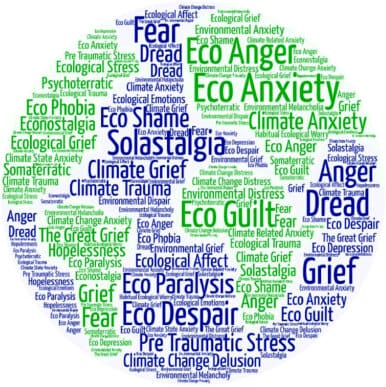
Eco-anxiety is chronic fear and stress about the climate crisis, characterized by feelings of powerlessness and anger. This is associated with eco-perfectionism as if you are ‘messing up’ and not meeting the highest standard set, then this can increase feelings of guilt, hopelessness and fear.
During my teenage years I developed both eco-anxiety and eco-perfectionism and it led to burnout and misery. I was very passionate about making sustainable changes in my life and at one point I was completely committed to living a ‘plastic free’ life. However, this was a struggle for me and I ended up ‘spoilt’ many times, and I was left feeling guilty so I started to stop and reduce my use of plastic.

It took me a while to realize that this was just the thinking of a dangerous eco-perfectionist and that in order to make a difference I didn’t have to completely eliminate all plastic from my life but just reduce it where I could. This was a weight off my shoulders and has greatly improved my approach to sustainable living and has led to me encouraging others to get involved!
Change the World with Eco Imperfectionism
The best way to end the fast fashion industry and the climate crisis is to get more people to live in an imperfectly sustainable way. After all, to make sustainable fashion a trend we don’t need a few people doing it right—we need millions doing it imperfectly.
For smart and affordable fashion brands to support check outThe Ujo Shop’s Product Guide—and let’s help move the needle to make the fashion industry better.

Maisie is a content writer based in England. He recently graduated from the University of Exeter with his MA. He loves animals, nature and reading.