


Being a loyal consumer means wanting to understand the story behind each garment we buy. Given the current state of the fashion industry, for many brands this presents what can only be described as a horror story. Pollution, degraded environment and labor exploitation woven into every thread.
However, with curious inquiry and dedication to people and planet, this can lead to the discovery of products that share our values of protecting our planet. Of course, many of them are helpfully highlighted in the Ujo Shop product guide.
But engaging in the world of sustainable fashion and staying curious about our consumption can lead us to hold our favorite sustainable products to a higher standard. Ultimately herein lies our predicament – felt both individually and within the wider sustainable fashion community; Where should our energy, activism and criticism be focused?
Even the most sustainable product can do more. How do we find the right balance between the accountability of fashion brands that embed the sustainability of their identity and the fight against the destruction of fast fashion giants?
Recent examples suggest that this balance has been slightly skewed. Eco-perfectionism can hold us back. Brands that are openly committed to sustainability have recently come under fire and it has been suggested that the sustainable fashion community may be suffering from the curse of war.
Now let’s get into ittherethis happens,whyit also happens, importantly,Howwe must come close to finding the right balance.
Is Patagonia Greenwashing? Breaking the 2025 Impact Report
Published a few months ago, at the end of 2025, Patagonia’s progress report revealed a range of responses to the sustainable fashion community. The report highlights the progress made towards the company’s sustainability goals set 10 years earlier in 2015. Spanning 154 pages, the progress report provides in-depth details on the steps Patagonia has taken, but equally as important, where progress remains to be made.

Key takeaways from the report include:
- How has the company changed since giving ownership to the world
- Programs they supported with $180 million in grants
- The effects of the 1% of the planetary system
- Supply chain review
Following this report, there have been a number of responses – mostly positive ones about the undeniable honesty and transparency. They were also praised for their progress in contributing to the environment and allocating grants – especially after giving the company’s ownership to the world. These are all factors that contribute to Patagonia’s Ujo Shop gold rating, which you can read more about.
However, the reviews were not the only positive ones. Writing for akepa, a sustainable marketing agency, Micheal Wilkins asked if Patagonia could be included in the G…Greenwashing word.
Evidence for Wilkins’ claim includes Patagonia’s admission that greenhouse gas emissions are increasing, their continued use of 20% synthetics and discussion of their outdoor practices.
At the end of the article Wilkins admitted that calling Patagonia ‘greenwashing’ is unfair to a company that invests all its profits in environmental restoration and clearly leads the industry. However, Wilkins still gives a very pessimistic view that Patagonia should not be put in the spotlight and that “the company’s impact cannot continue without being reduced while it continues to speak boldly about protecting the planet”.
What this sums up is that we should focus our efforts on companies that have built their brand identity sustainability and purpose, like Patagonia, to the highest standards. But is this a fair judgment?
Transparency – The Good, The Bad and the Ugly
Ultimately, the more transparent a company becomes, the more choices it has about how it can do better.
By taking a different company like Zara, questions arise about where to start choosing to differentiate (un)sustainability of their business model. The details of Zara’s sustainable model can be read in this article, but to summarize some important points, owned by the multi-billion dollar company Inditex and despite publishing a sustainability report, they do not have any kind of critical self-reflection.
Instead, their report paints an overly positive picture of progress and unrealistic goals without acknowledging the fundamental unsustainability their business model depends on. They show greenwashing.
This is a situation that can feel discouraging and unattainable. It may seem more accessible to look elsewhere for brands whose greater openness and willingness to change offers tangible criticism.
Data: Patagonia vs. Inditex Emissions

However, a quick look at some data shows why this is actually not very effective…
Patagonia emitted 182,646 tons of CO2 in FY25 (and clearly disclosed this figure to the public) while Inditex emitted 13.4 million tons in FY24. In addition, in the same year, Patagonia donated 14.7 million dollars to non-profit environmental organizations while Inditex faced many environmental issues, such as its increased use of air cargo and expanding its production model.
The difference in CO2 emissions of about 13.2 million units is noticeable and, to be honest, not very understandable.
From these statistics alone, our attention should be focused on aiming to reduce the large impact of Inditex. Although all fashion companies have a job to do – something that Patagonia clearly acknowledges in their report – when comparing it to the work that fast fashion companies like Inditex have to do to save our planet, the additional efforts of smaller and more conscious businesses are less important for the industry as a whole.
This is very important as Inditex is no different in its impact. H&M emitted 5.7 million tons of CO2 in 2024, Primark emitted 6.04 million tons and Shein made a profit of $32.5 billion due to overproduction in 2023.
Of course, this does not mean that being responsible for our sustainable products is not something we should do. Scale is important. If we are going to think about individuals, the development is like confirmationeverythingindustries pay living wages change life. However, the impact of paying a living wage to thousands of factories is arguably a more urgent task than focusing on companies operating under 100 and actively aiming to reduce exploitative practices in them.
When we think about this, it does not help to focus too much energy on companies that choose not to grow to an unsustainable size, and practice sales – an inherently unsustainable industry – as sustainably as possible.
Some Final Thoughts – We’re All On The Same Team!

Ultimately, we still have a big challenge ahead of us to make the fashion industry as a whole sustainable. It’s easy to get caught up in the critical companies we hold dear. And this is because there is always more to do – and we must do more! However, the important thing is that, as people and businesses who want to work to make the industry sustainable, we must work together. We are all on the same team!
Is Sustainable Fashion Infighting Taking Us Back?
This is not a new situation. We tackled a version of this same argument in a recent video, explaining why the argument that “sustainable fashion is not the answer” — while well-intentioned — misses the point:
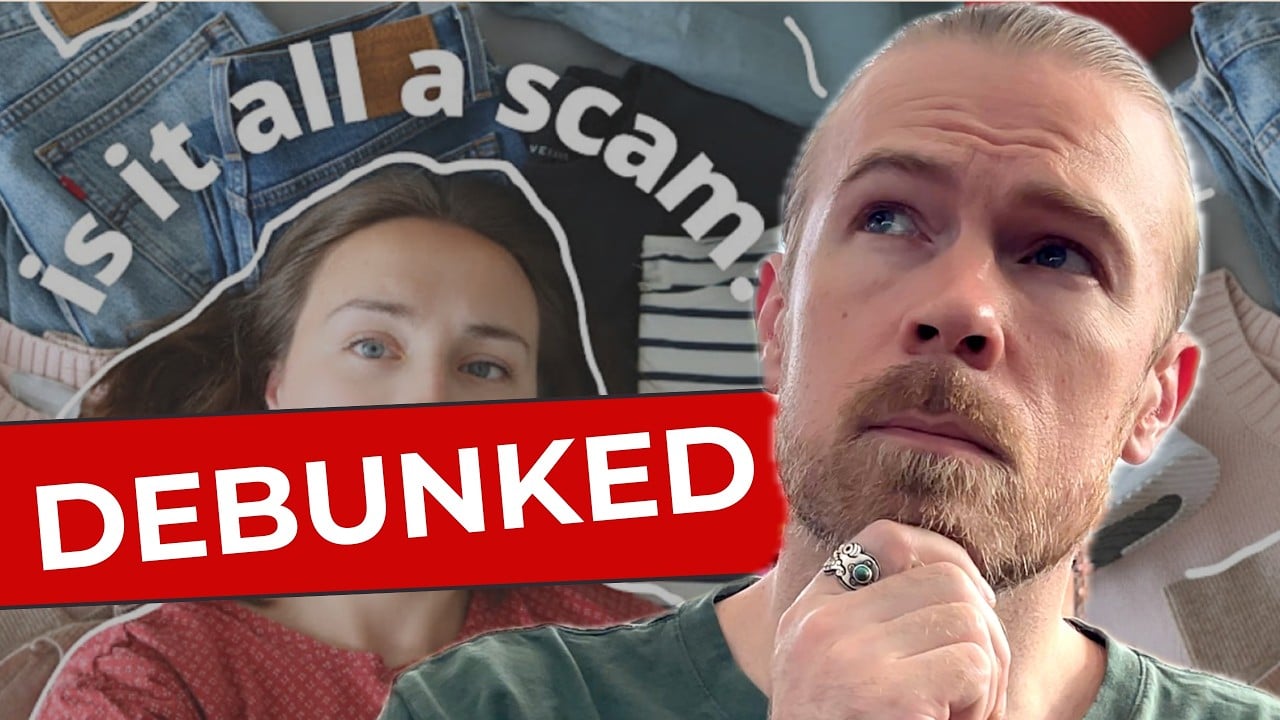
As highlighted, approaching the bold and brutal end of the fashion spectrum can feel difficult – fruitless even. But nothing has changed by thinking this way.
So how do we begin to address the impact of these fast fashion giants?
I think the key is to start with small steps that allow for results that grow bigger over time. Actions liketo boycottbrands like Zara,awarenessthrough social media and beingreasonable discussionand friends about the impact of these products all point us in the right direction. These actions harm what these brands do. It makes us, and others, think twice about the true cost of what we buy.
So, yes, all companies must be accountable. But sometimes stepping back and looking at the bigger picture helps us focus our efforts more effectively and understand the magnitude of the impact we face when considering the continued financial success of fast fashion giants.

4 actions for productive change
- Shoot fast fashion brands like Shein, Zara, H&M and Temu
- Support sustainable products like our 100+ certified products that are driving real change
- Recycle your existing clothes to extend their life and keep them out of the landfill
- Stay curious about the impact of your clothes, start productive conversations about the impact of fast fashion and keep in mind the changing priorities of the fashion industry.

Rhona is studying Masters in Global Development and Environment at the University of Bristol. She also works in sustainable retail and, in her spare time, enjoys reading, fundraising and yoga.