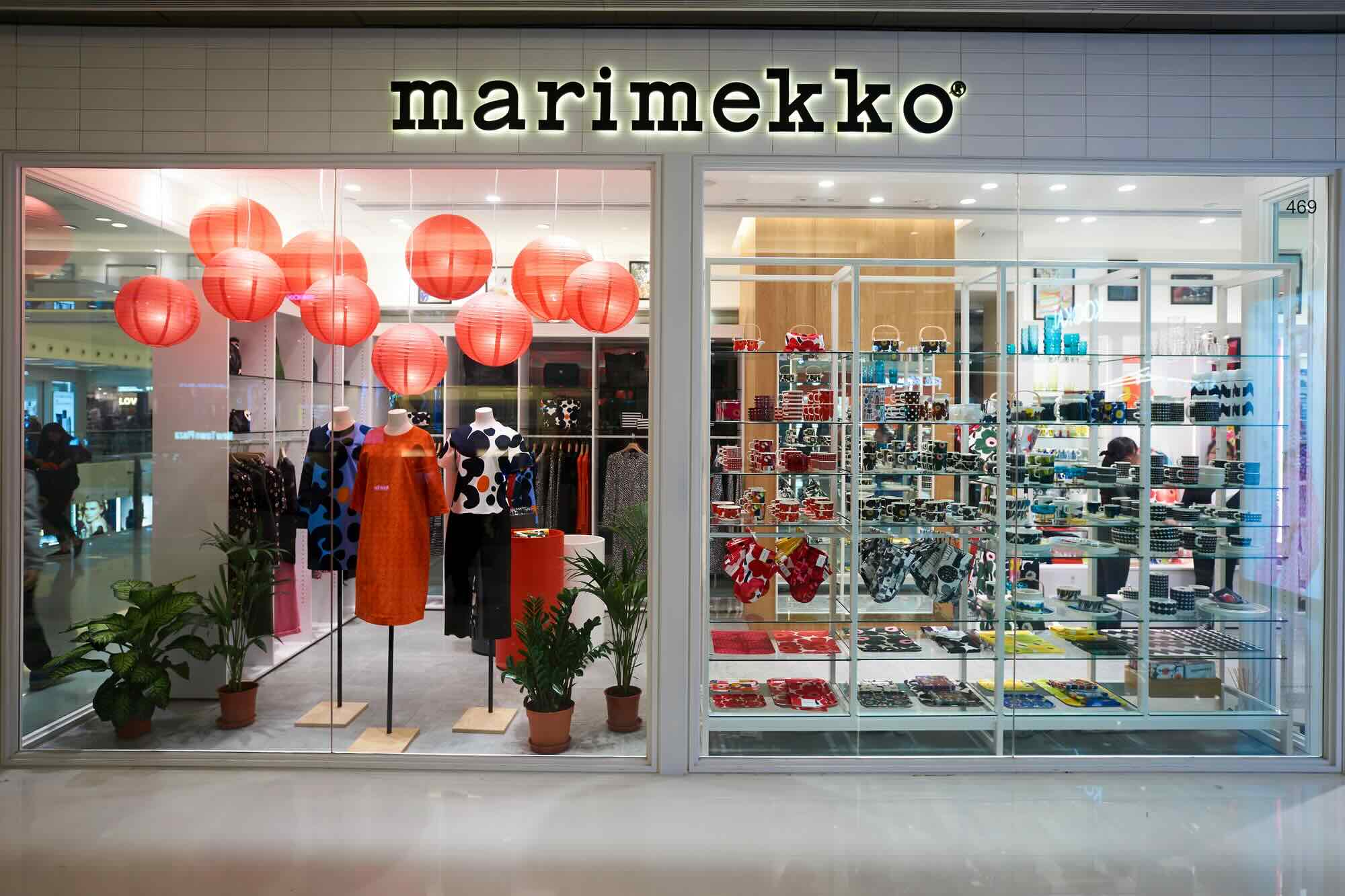

Marimekko is famous for Unikko, the poppy print Maija Isola designed in 1964. Fewer people know what those prints are printed on. In 2025, 89% of the textiles Marimekko bought were organic, regenerative, or recycled.
This guide takes a close look at 9 Marimekko sustainable fabrics used in its clothing and bags: how each one is made, why it’s better than the conventional version, and one real product that uses it. The brand uses many more materials than these nine, and we list the rest further down.
How Ujo Shop Rates Marimekko
Marimekko is a Finnish lifestyle design company founded in 1951 by Armi and Viljo Ratia. It sells clothing, bags, accessories, and homeware in more than 3,500 prints and colors. Many of its fabrics are still printed at its own factory in Helsinki.
Marimekko is on Ujo Shop’s sustainable brands list with a certified rating. We rated it excellent for transparency, and it also scored well on fair labor. Learn how our certification system works and how Marimekko earned its rating.
Marimekko’s Fabric Mix at a Glance
Marimekko introduced its material strategy in 2021. That year, just 7% of its textiles were preferred materials. By 2025, it was 89%.
| Material category | Share of sourced textiles, 2025 |
|---|---|
| Organic and regenerative | 68% |
| Recycled | 21% |
| Conventional and conventional enhanced (certified or traceable) | 11% |
| Innovative | 0% |
Marimekko reports that since 2019, the greenhouse gas emissions of its textiles have fallen 29% per kilogram, and their water scarcity score has fallen 84%. These figures come from Marimekko’s own sustainability strategy tracking, which its auditor did not independently verify.
Marimekko’s recycled materials are certified to GRS or RCS. Its organic materials are certified to GOTS or OCS.
Recycled and Organic Marimekko Sustainable Fabrics
These five fabrics fall under Marimekko’s preferred materials. All of Marimekko’s recycled materials are certified, and its organic materials are certified to an organic standard like GOTS (Global Organic Textile Standard).
Ujo Shop is reader-supported. We only feature fashion brands that pass our sustainable brand criteria.Learn more here.
1. Recycled Cotton
What is it and how is it made?
Recycled cotton is a sustainable material made from cotton waste, such as scraps from textile factories and old garments. It is made by collecting post-industrial and post-consumer cotton waste. The scraps are then processed into new yarns and fabrics.
The benefits of recycled cotton on the environment:
- It reduces textile waste.
- Decreases water and pesticide consumption.
- Helps limit CO2 emissions.
Marimekko also recycles its own cutting waste. Scraps from its classic Tasaraita shirt are collected, recycled, and spun into new yarn, and the recycled fibers keep their original colors, so they don’t need to be dyed again.
Example of a Marimekko product that uses recycled cotton:
Maridenim Vaihe Unikko Jean Shirt
This button-up jean shirt features Marimekko’s iconic Unikko pattern on non-stretch cotton denim. Unikko means “poppy” in Finnish.
It’s part of Marimekko’s Maridenim line, which is designed following the Jeans Redesign guidelines of the Ellen MacArthur Foundation. That means the denim is made from a single fiber with no elastane, uses minimal hardware and removable buttons, and follows the guidelines for washing, finishing, and chemical use. Instead of traditional stone washing, Marimekko uses methods like laser technology and ozone washing. Because of the finishing process, each piece has its own unique shade and patina.

Materials:
- 80% organic cotton
- 20% recycled cotton
Key features:
- Unikko pattern in mid indigo.
- Jean button closure.
- One chest pocket.
- Back yoke seam.
- Cuffed sleeves with jean button closures.
- Slightly curved hem.
Price: $430.00
Shop the Maridenim Vaihe Unikko Jean Shirt.
2. Organic Cotton
What is it and how is it made?
Did you know that much of the clothing we wear started life in the soil? Cotton is grown in the field, and cotton fiber comes from the white, fluffy fiber that surrounds a seed in the cotton plant. The fiber is then spun into a thread. Organic cotton is grown without synthetic pesticides, synthetic fertilizers, or genetically modified seeds. Once cotton has been woven, it is light, breathable, and comfortable to wear. Cotton is one of the most commonly used materials in garments, and it is used in many of Marimekko’s products. In 2025, organic cotton made up 84% of all the cotton Marimekko sourced, up from 52% the year before.
The benefits of organic cotton on the environment:
- Organic farming uses natural methods and doesn’t use highly toxic substances.
- Organic farmers work with nature to build healthy soils that store carbon and help to fight climate change.
- Saves and protects water.
- Helps farmers feed their families by creating a balanced system to grow other crops alongside the cotton. This keeps the soil healthy, encourages wildlife, and protects topsoil.
- Gives the farmers control, not the GM (genetically modified) seed companies.
- Organic farming doesn’t use hazardous synthetic pesticides, which can damage ecosystems and poison waterways.
Example of a Marimekko product that uses organic cotton:
Koostua Unikko Dress
This vibrant green cotton jersey dress featuring the Unikko pattern is made of 100% organic cotton.

Materials:
Key features:
- Unikko pattern in green and dark green colors.
- Relaxed, A-line fit.
- O-neck dress.
- Short sleeves.
Price: $260.00
Shop the Koostua Unikko Dress.
3. Recycled Wool
What is it and how is it made?
Recycled wool is a sustainable textile made from excess yarn, fabric scraps, and old garments from pre- and post-consumer waste. It is created by repurposing various sources of wool waste. Materials are collected, processed to extract fibers, and then spun into fresh yarn.
The benefits of recycled wool on the environment:
- Wool is biodegradable.
- Easily reusable and recyclable.
- Woolen products have a very long lifespan, so they can often be passed from one generation to the next.
- The fibers in woolen garments can be mechanically recycled and used to make new products.
Example of a Marimekko product that uses recycled wool:
Iso Unikko Throw
This cozy jacquard knit blanket features the Iso Unikko pattern, a large-scale, minimalist version of Maija Isola’s iconic 1964 poppy. The blanket is made from a wool blend that contains more recycled wool than virgin wool, as well as recycled polyamide and other fibers.

Materials:
- 44% recycled wool
- 37% virgin wool
- 16% recycled polyamide
- 3% other fibers
Key features:
- Iso Unikko pattern in off-white and chestnut.
- Reversible jacquard knit.
- Measures 130 x 170 cm.
Price: $288.00
Buy the Iso Unikko Throw here.
4. Recycled Polyester
What is it and how is it made?
Recycled polyester has become a popular sustainable fabric choice for many fashion brands, including Marimekko, because it is practical, durable, and responsibly sourced. It is made from pre- and post-consumer waste, repurposing used plastic bottles and discarded polyester textiles. It is made by turning plastic waste, like PET bottles, into polyester fibers.
The benefits of recycled polyester on the environment:
- It can be recycled mechanically or chemically.
- Uses less energy than virgin polyester.
- By turning plastic waste into polyester fibers, there is less need for new raw materials, so this saves energy and helps to lower carbon emissions.
- The making of recycled polyester supports a circular economy in the textiles industry by turning waste into useful products.
- Reduces textile waste and plastic pollution by diverting waste away from landfills.
A Marimekko product that uses recycled polyester:
Neat Crossbody Unikko M Shoulder Bag
The Neat Crossbody M shoulder bag in the Unikko pattern is one of Marimekko’s best-selling accessories. It is practical and planet-friendly, as the main material of the bag is recycled polyester, with the shoulder strap made of recycled polyamide.

Materials:
- Bag: 100% recycled polyester
- Shoulder strap: 100% recycled polyamide
Key features:
- Features the Unikko pattern.
- Adjustable shoulder strap.
- Zipper closure.
- Marimekko logo on the front of the bag.
- Slip-in pocket on the inside where the whole bag can be folded away for easy storage.
Price: $115.00
Shop the Neat Crossbody Unikko M Shoulder Bag here.
5. Recycled Polyamide
What is it and how is it made?
Recycled polyamide is a synthetic fiber commonly known as nylon, made from pre- and post-consumer waste such as fabric waste, industrial fishing nets, and carpets. It is made by reprocessing these discarded polyamide materials. The recycling process typically involves melting down the waste polyamide and extruding it into new fibers. It is often used in activewear, swimwear, and hosiery due to its durability, elasticity, and resistance to abrasion.
The benefits of recycled polyamide on the environment:
- It can be recycled mechanically or chemically.
- The recycling reduces the need for raw materials and uses less energy, compared to virgin polyamide production.
- Lower carbon footprint than virgin polyamide.
A Marimekko product that contains recycled polyamide:
Carry All Solid Bag
This practical bag is part of Marimekko’s Wear All Day series and is ideal for everyday use. The main material and shoulder strap of this bag are made of recycled polyamide.

Materials:
- Main material and lining: 100% recycled polyamide
- Shoulder strap: 100% recycled polyamide
- Other components: polyester and leather
Key features:
- Features the Unikko pattern on the adjustable, jacquard knit shoulder strap.
- Bag in color black.
- Zipper closure.
- Open pocket on the outside and an open pocket on the inside.
- Marimekko keychain attached to the front.
- Marimekko logo on the bottom edge of the bag.
Price: $220.00
View the Carry All Solid Bag here.
Certified Wool, Mohair, Leather, and ECOVERO™
So far, we have explored the key recycled and organic materials, like organic cotton, that Marimekko uses to minimize its environmental impact. In addition to recycled and organic materials, Marimekko uses certified and more traceable fabrics in its aim to be fully transparent. Marimekko classifies these as conventional enhanced materials. They aren’t organic or recycled, but each one is certified to a third-party standard that covers how the material is produced and traced.
Next, we will focus on four of the conventional enhanced materials Marimekko uses. Together, conventional and conventional enhanced materials made up 11% of all sourced textiles in 2025, down from 40% in 2024.
6. Certified Wool
What is it and how is it made?
Certified wool is made from the natural fleece of sheared sheep, and it is known for its softness, durability, and comfort in textiles. Marimekko uses wool that meets the Responsible Wool Standard (RWS), which certifies animal welfare, land management practices, and workers’ rights in wool production. Marimekko only accepts merino wool from suppliers that do not use mulesing as part of their animal husbandry techniques. Certified wool comes from farms that follow the RWS, which mandates high animal welfare and sustainable land management. The shorn fleece is then carefully scoured, combed, and spun under a strict “chain of custody.” This ensures the wool is traced and verified from the pasture to the final garment.
Some of Marimekko’s merino also comes from farms that follow the ZQ+ regenerative standard, which focuses on soil health and biodiversity and traces wool back to individual farms. Marimekko also holds a Responsible Animal Fiber certification, issued by Control Union, covering wool, alpaca, and mohair.
The benefits of certified wool on the environment:
- 100% natural and renewable.
- According to the International Wool Textile Organisation, it is the world’s most recycled apparel fiber.
- It is biodegradable, so it doesn’t contribute to microplastic pollution in landfills and oceans.
- It is thermo-regulating and easy to care for, making it long-lasting.
- It can be repaired and enjoyed for a long time.
- Supports the circular economy.
A Marimekko product that contains certified wool:
Sportti Unikko Knitted Pullover
This knitted pullover features a joyful Unikko pattern and is made of a wool and cotton blend. According to Marimekko, the wool used in this product can be traced to farms that implement regenerative principles.

Materials:
- 56% certified wool
- 38% organic cotton
- 6% polyamide
Key features:
- Features the Unikko pattern in a dark orange and beige color.
- Slim, straight fit.
- Polo collar.
- Short button placket in the front.
- Ribbed sleeve ends and hemline.
Price: $395.00
Browse the Sportti Unikko Knitted Pullover here.
Learn more about the Responsible Wool Standard.
7. Certified Mohair
What is it and how is it made?
Certified mohair is a natural luxury fiber made from the long, curly fleece of the Angora goat. Marimekko uses mohair certified to the Responsible Mohair Standard (RMS), which covers the welfare of the goats, land management, and workers’ rights on farms. This standard tracks the certified material from farm to final product.
The material is made by first shearing the Angora goat. Then the mohair is washed to remove any impurities. Next, the fleece is combed into strands, a process called carding, and the strands are spun into yarn. After a final washing process, it is ready to be woven or knitted into clothing, like knitwear, coats, and hats.
The benefits of certified mohair on the environment:
- 100% natural and renewable.
- An entirely biodegradable fabric, so it breaks down and doesn’t shed microplastics.
- Warm, light, and durable, so mohair pieces last for years with gentle care.
Please be aware that consumers who want to wear mohair without ethical or environmental concerns should pick garments made from certified mohair, so choose a brand like Marimekko that follows the Responsible Mohair Standard.
Read more about the Responsible Mohair Standard.
A Marimekko product that uses certified mohair:
Lovea Tumma Knitted Skirt
This stylish jacquard knit mini skirt is part of Marimekko’s pre-loved range. It is made of a merino wool and mohair blend.

Materials:
- 65% certified merino wool
- 20% recycled polyamide
- 15% certified mohair
Key features:
- Second-hand skirt.
- Features the Tumma pattern in red and blueberry colors.
- Slim, straight fit.
- Ribbed elastic waistband.
- Size is Medium, length is 44 cm.
Price: $88.00
Shop the Lovea Tumma skirt now.
8. Certified Leather
What is it and how is it made?
Certified leather is animal hide that has been processed in a tannery verified by independent organizations like the Leather Working Group (LWG), the leading environmental certification for leather production. Certified leather production is complex, but the process involves preserving, cleaning, tanning, dyeing, and finishing to transform the raw animal material into leather products.
All the leather Marimekko sources comes from LWG-certified tanneries, which means its leather products support responsible tanneries that work to minimize environmental impact. The leather used in Marimekko’s products is always a by-product of meat production, as Marimekko only accepts leather from animals that have been bred for food production. Its product requirements also ban leather from farms on cleared Amazon land. Leather is durable and long-lasting, making it an ideal material for jackets, bags, and other accessories.
The benefits of certified leather on the environment:
- Supports practices that reduce environmental impact, e.g., responsible chemical management.
- Strict wastewater treatment.
- Tanneries are audited on their energy use and emissions.
- Using hides from meat production puts a by-product to use instead of sending it to landfill.
An example of a Marimekko product that uses certified leather:
Phone Pocket Unikko Shoulder Bag
This practical phone pocket bag comes in the iconic Unikko pattern in either a light pink or dark brown color, and the main material is padded leather.

Materials:
- Main material: 100% leather
- Inner lining: 100% polyester
Key features:
- Features the quilted Unikko pattern in a light pink or dark brown color.
- Snap button closure.
- Narrow leather shoulder strap that can be adjusted with a knot.
Price: $195.00
Buy the Phone Pocket Unikko.
Marimekko is a member of the Leather Working Group, which is committed to supporting responsible leather manufacturing. Discover more about the Leather Working Group certification.
9. ECOVERO™
What is it and how is it made?
ECOVERO™ is a brand name for a viscose material developed by Lenzing AG. It is a man-made cellulosic fiber derived from FSC- or PEFC-controlled or certified wood sources. The material is made by harvesting wood pulp from forests certified for sustainable management, then transforming and processing the wood pulp into long, thin fibers. Next, the fibers are spun into yarns, and the spun yarns are then woven or knitted into fabric. The last stage is dyeing, which adds color to the fabric, but this can be done at different stages of production.
Benefits of ECOVERO™ on the environment:
- Produced from natural raw materials, specifically wood and pulp sourced from certified or controlled forests.
- The forests where the wood pulp is harvested are responsibly managed to preserve biodiversity, protect ecosystems, and reduce deforestation.
- The material follows a production process that meets the strict EU Ecolabel standards.
- Lenzing reports lower emissions and water impact than generic viscose.
- ECOVERO™ fibers can be identified in the finished product, which supports supply chain transparency.
Since 2024, Marimekko has committed to sourcing only wood-based textile materials made from recycled or FSC- or PEFC-certified raw materials.
Learn more about the FSC, the global standard for responsible forest management.
A Marimekko product that uses ECOVERO™:
Ennallaan Unikko Knitted Dress
This bright knitted dress features the jacquard knit Unikko pattern. This product is made of an ECOVERO™ viscose and merino wool blend.

Materials:
- 55% certified merino wool
- 45% ECOVERO™ viscose
Key features:
- Slim, straight fit.
- Features the jacquard knit Unikko pattern in an orange and red color.
- Double-ribbed O-neck.
- Long sleeves.
Price: $475.00
Shop the Ennallaan Unikko Dress.
ECOVERO™ is a trademark of Lenzing AG. Learn more about Lenzing AG, the partner for sustainable innovations and better fibers.
More Materials in Marimekko Brand Clothing
The nine fabrics above are only part of the story. Marimekko also lists these materials:
- TENCEL™ lyocell:A soft, drapey fiber made from certified or controlled wood sources.
- CIRCULOSE® viscose:Viscose made by recycling cotton-rich textile waste.
- Masters of Flax® linen:Flax grown in Western Europe, traceable from field to fiber. Flax needs little water and few pesticides compared to cotton.
- Cupro:A silky fiber made from cotton linter, a byproduct of cotton processing. Marimekko’s cupro carries recycled content certification.
- Organic silk:Certified to GOTS, which covers environmental and social criteria. Marimekko also uses silk without organic certification.
- Certified alpaca:Certified to the Responsible Alpaca Standard.
- Certified down and feathers:Certified to the Responsible Down Standard.
- Recycled elastane:Adds stretch while reducing the need for virgin fossil-based raw materials.
At its Helsinki printing factory, Marimekko has also used natural dyes since 2019. Most are made from industrial side streams, like a black dye made from recycled wood waste.
Where Marimekko Falls Short
Marimekko’s material progress is real. It isn’t the whole picture.
- Better Cotton can’t be traced.Marimekko still uses some Better Cotton, which is sourced through a mass balance system that doesn’t allow physical tracing to finished products. Marimekko says it’s phasing Better Cotton out.
- Synthetics still shed.Recycled polyester and polyamide keep waste out of landfills, but like virgin synthetics, they release microfibers when washed.
- Blends are hard to recycle.Products like the Jokeri blanket mix wool with recycled polyamide. Blended fibers are much harder to recycle at end of life than single-material products.
- Logistics missed its target.Marimekko aimed to cut logistics emissions per kilogram by 50% by 2025. It achieved 5%, mainly because it shipped more by air to work around supply chain disruptions.
- Innovative materials are still at zero.Marimekko is testing new materials, but they rounded to 0% of sourced textiles in 2025.
How to Make Your Marimekko Last
The most sustainable Marimekko piece is the one you already own. Care for it according to its label, and when you’re done with it, sell it, donate it, pass it on, swap it, upcycle it, or recycle it. Marimekko’s pre-loved marketplace is a good place to start.
The Verdict on Marimekko’s Sustainable Fabrics

Marimekko has moved fast. In four years, preferred materials went from 7% to 89% of its textiles. The certified materials in its remaining mix are held to recognized third-party standards. And its biggest weak spots, logistics and fiber blends, are ones it discloses openly.
Looking for more brands like Marimekko? Browse our brand directory to find over 100 sustainable brands we certify and recommend.

Antonia is based in Gloucestershire and enjoys writing about topics like travel and the environment. She loves learning new languages, reading, baking and running.